
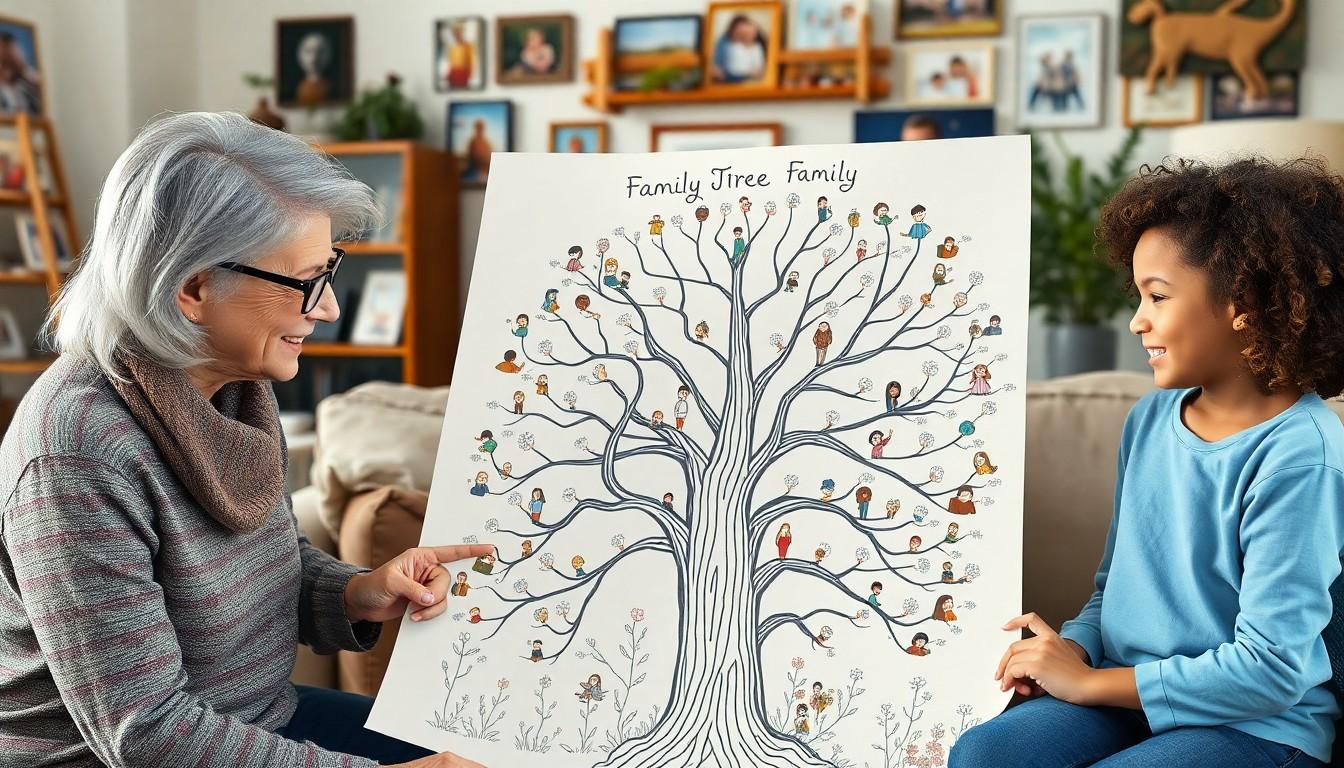
Family trees can be a bit like that tangled ball of yarn your cat loves to play with—confusing yet oddly fascinating. Understanding family tree relationships isn’t just about tracing lineage; it’s about uncovering the quirky connections that make each family unique. Who knew Aunt Edna was actually a second cousin twice removed?
Understanding Family Tree Relationships
Family tree relationships encompass both direct lineage and the many intricate connections that exist within a family. Delving into these relationships reveals the fascinating ties that define family dynamics.
The Basics of Family Trees
Family trees represent the lineage structure of families. Individuals at the top typically show the oldest generation, creating a visual history of descendants. It’s crucial to note that primary connections include parents, children, and siblings. Secondary connections arise from marriages and partnerships, forming a broader network of relatives. Ancestors trace back to great-grandparents or further, reflecting cultural heritage. Understanding the basic layout helps grasp more complex relationships that emerge over time.
Types of Relationships
Family structures consist of various types of relationships that vary in degrees of separation. Immediate family members include a person’s parents and siblings, while extended family members encompass grandparents, aunts, uncles, and cousins. Distant relatives, such as second cousins or third cousins, illustrate deeper branches in the family tree. Cultural definitions affect these relationships, as terms like “uncle” may also refer to close family friends. Additionally, recognizing removed relationships clarifies generational gaps, such as “twice removed,” indicating differing generations between relatives. Understanding these distinctions enhances awareness of one’s family heritage.
Importance of Family Tree Relationships
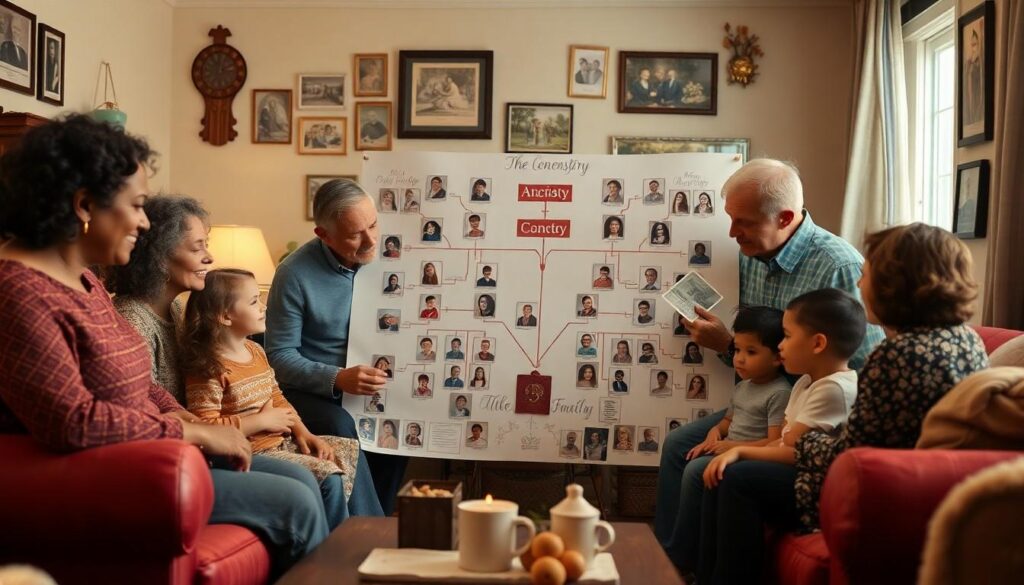
Recognizing family tree relationships holds significant value for individuals and communities alike. These connections foster a deeper understanding of heritage and identity.
Genetic Connections
Genetic ties illustrate relationships within a family. They reveal inherited traits and health predispositions. Close relatives share a higher percentage of DNA, which can alert family members to potential genetic conditions. For example, first cousins share about 12.5% of their DNA, while siblings share approximately 50%. Understanding these connections can facilitate informed health decisions. It’s essential to note how these genetic relationships intertwine with shared ancestry, influencing one’s biological identity. Discovering genetic connections strengthens familial bonds and enhances individual knowledge of personal health history.
Cultural Significance
Cultural aspects play a crucial role in family tree relationships. Many societies place importance on lineage and ancestry, shaping identity and community ties. Family stories and traditions often get passed down through generations, enriching the cultural fabric. In various cultures, understanding one’s roots strengthens a sense of belonging. For instance, in Native American traditions, the family tree often signifies clan connections, essential for social structure. Recognizing cultural nuances can deepen appreciation for diverse family dynamics. Celebrating these connections fosters mutual respect and understanding among different heritage groups.
Common Terms in Family Tree Relationships
Understanding the terminology in family trees helps clarify relationships. Key terms include ancestors, descendants, siblings, and cousins, which play vital roles in defining family connections.
Ancestors and Descendants
Ancestors represent earlier generations, such as grandparents and great-grandparents. These individuals form the foundation of a family tree. Descendants, in contrast, include children, grandchildren, and beyond, illustrating the lineage that emerges from ancestors. Individuals tracing lineage often focus on these two groups to construct a complete picture of their heritage. Understanding these terms enables deeper connection with one’s roots while highlighting generational importance.
Siblings and Cousins
Siblings consist of brothers and sisters who share the same parents. These immediate family members foster close relationships and shared experiences. Cousins extend the family network, resulting from aunts and uncles. First cousins share a grandparent, while second cousins connect through great-grandparents. Familiarity with these terms aids in understanding one’s family dynamics and expanding connections. Recognizing the difference between siblings and cousins assists in creating a comprehensive family tree.
Tools for Building Family Trees
Various tools exist for building family trees, each catering to different needs and preferences.
Online Software Options
Numerous online platforms streamline family tree creation. Websites like Ancestry.com and MyHeritage offer user-friendly interfaces and extensive databases. Features often include hints for connecting with existing family lines and importing GEDCOM files. Some applications provide collaborative tools, allowing families to work together in real-time. Most platforms come equipped with mobile apps, making it convenient to access family trees on the go.
Traditional Methods
Pen and paper remain timeless methods for building family trees. Many individuals appreciate the tactile aspect of sketching relationships by hand. Charts and diagrams allow for personal touches, such as photographs and handwritten notes. Family history books serve as keepsakes, preserving stories alongside genealogical data. Local libraries often have resources, including family history centers, which can help gather information through community records.
Understanding family tree relationships offers valuable insights into personal heritage and identity. By exploring these connections individuals can appreciate the intricate web of relationships that shape their family dynamics. Recognizing the significance of both immediate and extended relatives fosters a sense of belonging and community.
Utilizing various tools for building family trees enhances this journey. Whether through online platforms or traditional methods each approach provides unique advantages for tracing lineage and preserving family history. As individuals delve into their family stories they not only uncover their roots but also strengthen ties with past generations. Embracing this knowledge enriches both personal lives and cultural understanding in an increasingly interconnected world.